Platform — Module 2
CNN-based defect classification with confidence scoring
Five defect taxonomy categories. Every decision carries a calibrated confidence score. Below-threshold classifications route automatically to human review.
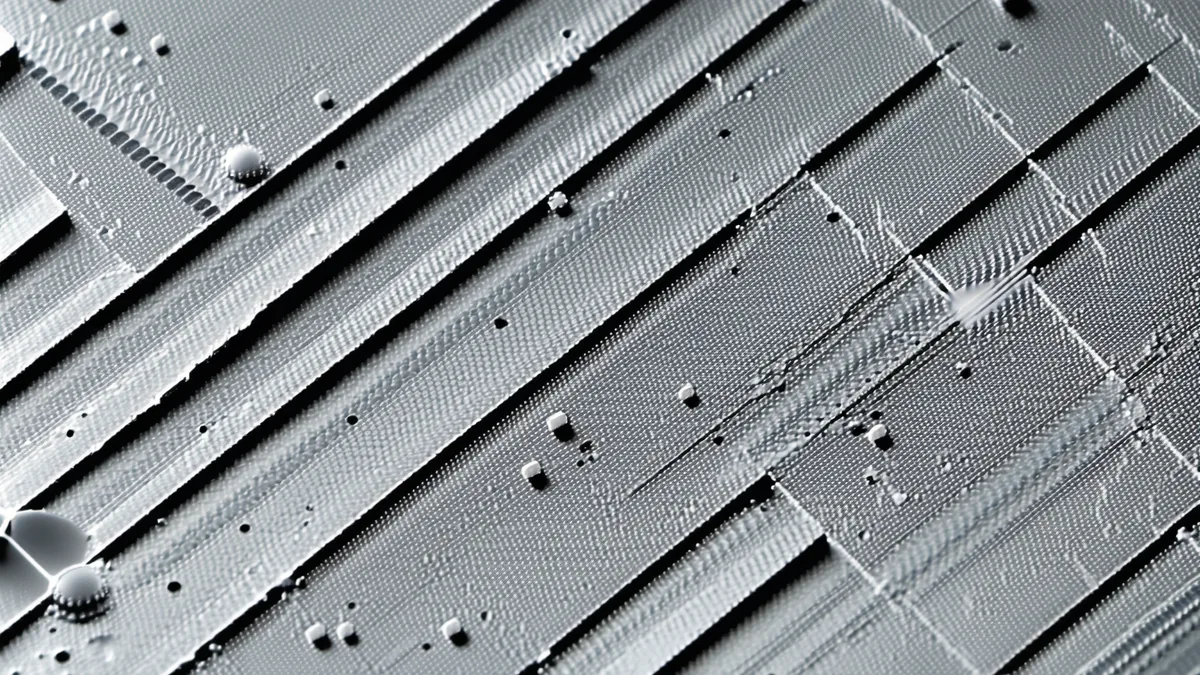
Taxonomy
Five defect categories, classified at inspection speed
Each defect type requires different optical signatures and model training data. Lenspathio's CNN is trained separately on each category — not a generic multi-class classifier.
Particle Contamination
Discrete particles from atmospheric deposition, process tool contamination, or substrate handling. Size range: 45nm–50μm. Classified by size, density, and distribution pattern.
Scratch Defects
Linear surface damage from wafer handling, cassette contact, or CMP processing. Classified by length, orientation, and depth signature. High correlation with yield loss in logic die layouts.
Crystal Defects
Stacking faults, dislocations, and etch pits in the crystal lattice. Correlated with epitaxial growth conditions and substrate quality. Classified as critical — flagged for immediate lot hold review.
Edge Exclusions
Defects in the 2–5mm edge exclusion zone. Includes edge chipping, residue buildup, and bevel contamination. Significant for compound semiconductor wafers with high bow.
Pattern Defects
OPC errors, bridge defects, and overlay shift at the patterned device layer. Detected via comparison to design-rule reference die. Most complex taxonomy — requires process-node-specific training data.
Human Review Queue
Any die-level classification below the configurable confidence threshold (default: 85%) routes to human review. Review queue is surfaced to MES with reason code and confidence score — no silent misclassifications.
Architecture
Confidence-calibrated classification
Every die-level classification decision includes a calibrated confidence score. The system is designed to know what it doesn't know.
Configurable threshold
The confidence threshold that triggers human review escalation is configurable per product type. Default: 85%. Logic QA lines typically run 90%. Memory lines where rework cost is lower can run 80%. Tunable per lot type.
Process-node-specific training
Each process node has distinct defect morphology. The model is not retrained on every customer's wafers — it uses optical physics-based synthetic augmentation calibrated to each node's illumination wavelength and pattern pitch.
No cloud training dependency
Model weights are shipped as part of the on-premises deployment package. Updates are delivered via versioned software releases — not pulled from cloud endpoints. Works in fully air-gapped environments.
KLARF defect code mapping
Every defect classification maps to a standard KLARF defect code for compatibility with downstream SEM review workflows. KLARF output is optional alongside SECS/GEM — both can be enabled simultaneously.
See classification results on your wafer data.
The evaluation runs the full classification pipeline on your actual lot. You receive a complete defect taxonomy breakdown, confidence score distribution, and false positive count per category.